
If you’ve received several estimates to replace your roof in Portland, you may be wondering how three contractors can look at the same house and come back with dramatically different prices.
One contractor may be thousands of dollars less than another. Both may be licensed. Both may offer an architectural shingle from a recognizable manufacturer. On paper, the proposals can even look remarkably similar.

So what’s the difference?
The answer is that you aren’t necessarily being quoted the same roof.
A roofing system includes much more than the shingles you see from the street. Underlayment, starter shingles, flashing, ventilation, pipe penetrations, edge metal, valleys, ridge caps and the condition of the structure underneath all affect what you’re actually buying.
There is also another significant difference that doesn’t come in a bundle from the roofing manufacturer: the contractor installing it.
At Armadas Exterior, we believe homeowners should understand those differences before choosing a contractor. Here are some of the things we recommend comparing when reviewing roofing estimates in the Portland area.
1. Don’t Compare Roofing Estimates by Shingle Brand Alone
One of the easiest mistakes to make is comparing two proposals because they both specify the same shingle.
Suppose two Portland roofing contractors both propose a GAF Timberline HDZ roof.
At first glance, they appear to be offering the same product.
They may not be.
The shingles are only one component of the roofing system. The proposals can differ in:
- Underlayment
- Ice-and-water protection
- Starter shingles
- Ridge cap shingles
- Valley construction
- Rake and drip-edge metal
- Pipe flashing
- Intake and exhaust ventilation
- Plywood replacement
- Manufacturer warranty eligibility
- Workmanship coverage
Those differences matter.
At Armadas Exterior, even our standard roofing system is designed as a complete system rather than simply choosing a shingle and finding the least expensive components to install around it.
As the roofing systems increase in quality, we upgrade the components with them.
For homeowners looking toward the higher end of architectural shingles, one product I particularly like is GAF Timberline UHDZ. In my opinion, UHDZ provides much of what makes a premium designer shingle attractive without forcing the homeowner into the distinctive appearance of a designer roof.
That doesn’t mean UHDZ is right for every homeowner. It means the conversation should be about the entire roofing system and what the homeowner is trying to accomplish, not simply which shingle has the lowest installed price.
2. Portland’s Older Homes Present a Different Roofing Challenge
Portland has an enormous inventory of older homes.
We routinely encounter houses built in the 1920s, 1930s and subsequent decades that were constructed under completely different building standards than homes being built today.
And here’s something homeowners sometimes find surprising:
An old house can function perfectly well with a ventilation system that wouldn’t meet today’s expectations.
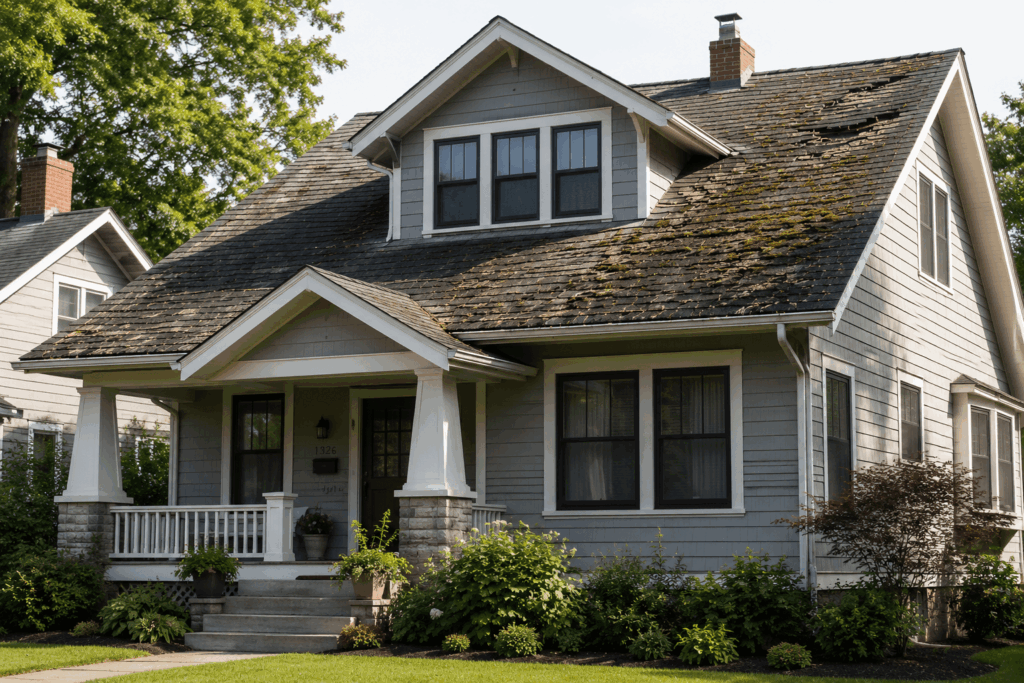
Think about a 100-year-old Portland home.
It may have older windows, minimal air sealing and a generally draftier building envelope. That house has been exchanging air naturally for decades.
Then we improve it.
The homeowner installs new energy-efficient windows. They replace the siding. They add insulation. They seal penetrations and make the home considerably tighter.
Those are good improvements, but we’ve changed how that house behaves.
Heat and moisture that previously escaped through a relatively loose building envelope can now migrate upward and accumulate in the attic.
Suddenly, attic ventilation becomes much more important.
A roofing contractor shouldn’t blindly look at a 100-year-old house and declare that everything must be reconstructed simply because today’s standards are different. But we should understand how the house works, what improvements have been made to it, and whether the attic now needs additional intake or exhaust ventilation.
3. Proper Intake Ventilation Is More Complicated Than Cutting a Hole
This is one of those details most homeowners will never see after their roof is finished.
That’s precisely why the contractor needs to understand it.
When we need to create roof-deck intake ventilation, the opening needs to be properly located above the thermal wall and insulation so outside air can enter the attic and travel naturally through the attic space toward the exhaust ventilation.
But cutting the opening is only part of the installation.
A properly constructed system involves creating the opening in the roof deck, integrating ice-and-water membrane around the penetration, installing the intake system, waterproofing the assembly correctly and then properly restarting the roofing system above it.
One detail we see missed is the starter course.
A contractor can install the intake, sandwich the assembly with ice-and-water membrane and think the job is finished.
It isn’t.
The starter course still needs to be installed correctly before the field shingles continue up the roof.
Without it, you can leave the first course of shingles inadequately secured at that transition. Those shingles can move in the wind and eventually become damaged or tear away.
It’s a small detail.
It’s also the type of detail that separates having roofing materials installed on your house from having a properly assembled roofing system.
4. Sometimes a Change Order Is Actually Good News
Nobody enjoys hearing that a contractor discovered additional damage after a project started.
Contractors don’t particularly enjoy delivering that news either.
But hiding the problem is worse.
One condition we commonly encounter in our wet Pacific Northwest climate is deterioration around barge rafters and other exposed wood components.
Some of that deterioration isn’t apparent until the existing roofing materials are removed.
At that point, the contractor has a choice.
We can cover it and keep moving.
Or we can stop, document what we’ve discovered, show the homeowner and give them the opportunity to repair it while the area is already exposed.
At Armadas, we choose the second option.
That may result in a change order. But discovering unforeseen damage isn’t necessarily evidence that a contractor is trying to increase the price of a project.
Sometimes the contractor who brings you bad news is the contractor who was paying attention.
I’d much rather have an uncomfortable conversation with a homeowner during construction than knowingly install a beautiful new roof over deterioration they could have addressed.
5. Plywood Replacement Is Another Reason Roofing Prices Vary
The same principle applies to roof sheathing.
You can’t always determine the condition of every sheet of plywood from the exterior inspection.
Once the existing roof is removed, deteriorated or otherwise unsuitable decking may become apparent.
That creates another difference between roofing proposals.
One contractor may make realistic provisions for replacing damaged sheathing. Another may assume there won’t be any. A third may address it only after construction begins.
This is why homeowners should ask how unforeseen plywood replacement will be handled and priced before signing the contract.
The cheapest proposal on day one isn’t necessarily the cheapest final invoice.
More importantly, keeping an estimate artificially low isn’t worth installing a new roofing system over a substrate that should have been replaced.
6. Flashing Details Matter — Even to the Next Contractor
Flashing isn’t particularly exciting.
It is, however, one of the details I look at when evaluating roofing workmanship.
For example, we use T-metal at rake edges because it provides a clean termination for the roofing and incorporates a hem that helps direct water away from the barge rafter.
Drip-edge flashing should also have the appropriate hem and shouldn’t simply be smashed tightly against the fascia or exposed rafter tails.
Why does that little gap matter?
Ask a gutter installer.
When the roof edge is constructed correctly, the gutter contractor can properly position the gutter beneath the flashing.
When it isn’t, the gutter installer may have to take a pry bar and physically pull the flashing away from the fascia just to get the gutter into the position where it belonged in the first place.
Will the homeowner notice the difference while standing in the driveway admiring their new shingles?
Probably not.
But good construction should make sense as an assembly, including the work another trade may need to perform years later.
7. A $20 Pipe-Boot Problem Doesn’t Mean You Need a $20,000 Roof
This is one of the most important things I can tell a homeowner:
A leaking roof does not automatically mean you need a new roof.
We receive calls from homeowners who understandably assume that water entering their home means their roof has failed.
Sometimes it has.
Sometimes the problem is considerably simpler.
A common example is a failed rubber gasket around a plumbing pipe penetration. Inexpensive pipe boots can deteriorate and eventually allow water around the penetration even though the surrounding roofing system still has useful life remaining.
We actually keep slip-over replacement boots in our trucks for this reason.
There have been situations where we’ve gone to a homeowner’s property expecting to perform a roofing inspection, found that the roof itself was still serviceable and determined that a failed pipe-boot gasket was causing the leak.
When circumstances allow, we’ll put the slip-over replacement on while we’re there.
Sometimes we simply fix it and leave.
No roof sale required.
That’s a much better outcome for the homeowner than replacing thousands of dollars of perfectly serviceable roofing because of a relatively minor failed component.
8. How Do You Know When a Roof Actually Needs Replacement?
Age matters, but age alone shouldn’t condemn a roof.
When I’m evaluating an asphalt-shingle roof, two of the things I’m interested in are the condition of the granules and whether the shingles remain properly bonded.
Significant granule loss can indicate that the roofing material is deteriorating. Shingles that are no longer properly sealed to one another can also become increasingly vulnerable to weather and wind.
But if the roof isn’t showing significant deterioration, the shingles remain bonded and there aren’t other conditions requiring replacement, there may be no compelling reason to replace the roof simply because somebody thinks it has reached a particular birthday.
There are certainly situations where replacement is the right recommendation.
There are also situations where a repair is all the homeowner needs.
A roofing inspection should determine which situation you’re actually dealing with.
9. Ask Who Is Managing Your Roofing Project
Materials are only part of what you’re purchasing.
You’re also purchasing the contractor’s process.
At Armadas Exterior, that process begins before the roofing crew arrives.
Our sales representative meets with the homeowner and documents the concerns and expectations surrounding the project.
That information is then transferred to the project manager.
Once the project moves forward, the project manager meets with the homeowner and goes through the property in greater detail.
That includes practical issues that can make an enormous difference during construction:
- Where should the dump trailer be placed?
- Where will materials be delivered?
- Which landscaping requires additional protection?
- Are there roses, shrubs or flower beds that need plywood or other protection?
- Have patio furniture, barbecues and fragile outdoor items been moved?
- Are there hanging decorations or wind chimes that need to come down?
- Has the lawn been mowed so cleanup and magnetic nail collection can be performed effectively?
- Are there pets or other property-specific concerns the crew needs to know about?
Those aren’t glamorous roofing details.
They’re the result of learning what causes problems on real projects.
Most importantly, the homeowner has one primary point of contact managing those concerns rather than being left to negotiate directly with whichever installation crew happens to be on the property.
Good project management doesn’t change the shingle installed on the roof.
It changes the experience of getting that roof installed.
10. Why Is One Roofing Estimate $4,000 Less?
Now we can return to the question that probably brought you to this article.
Suppose you receive three proposals:
Contractor A: Lowest price
Contractor B: Several thousand dollars more
Contractor C: Several thousand dollars above that
Which one should you hire?
The answer isn’t automatically the middle contractor, and it certainly isn’t automatically the most expensive one.
But it shouldn’t automatically be the cheapest either.
Ask what you’re actually receiving.
A lower-priced proposal may legitimately reflect a contractor with lower overhead or a different business model.
It can also reflect differences such as inexpensive felt underlayment, economy shingles, plastic ventilation components, inexpensive pipe boots, minimal provisions for deteriorated wood, different flashing practices, limited project oversight or a roofing system assembled from components selected primarily to reduce cost.
Some of those roofs may look virtually identical from the street on the day they’re completed.
That’s why homeowners need to compare specifications and processes rather than totals alone.
11. Questions I Would Ask Before Hiring a Portland Roofing Contractor
If I were comparing roofing proposals for my own house, I wouldn’t stop at “Are you licensed and insured?”
I’d want answers to questions like these:
- What exact roofing system are you installing—not just the shingle?
- What underlayment will you use?
- What starter and ridge products are included?
- What type and gauge of edge and valley metal will be installed?
- What pipe flashing will you use?
- How are intake and exhaust ventilation requirements determined?
- If new intake ventilation is required, how will it be integrated into the roofing system?
- What happens if you discover rotten barge rafters or other deteriorated wood?
- How much will additional plywood cost if it’s required?
- Will you show me unforeseen damage before covering it?
- Who manages my project after I sign the contract?
- Who do I call while the installation crew is working?
- How will my landscaping and property be protected?
- What manufacturer warranty does the complete system qualify for?
- Who verifies that the finished roof was installed according to the proposed specifications?
A contractor who knows their roofing system shouldn’t be uncomfortable answering those questions.
Our Goal Isn’t Just to Install Better Roofs
I’m Lloyd Anderson, owner of Armadas Exterior.
My involvement in the roofing industry extends beyond the projects our company installs. I serve in leadership within roofing-industry organizations, including the Western States Roofing Contractors Association and Associated Roofing Contractors of Oregon & SW Washington.
I take those roles seriously because I believe roofing contractors should continue educating themselves, sharing knowledge and raising workmanship standards throughout our industry.
Obviously, I want Armadas Exterior to earn your business.
But I also want the contractor you ultimately hire—even if it isn’t us—to install a roof that performs the way it should.
If better-informed homeowners start asking better questions, contractors have to provide better answers.
And if that raises the standard of roofing throughout our market, everybody benefits.
Considering a Roof Replacement in the Portland Area?
If you’re concerned about your roof, we can inspect it and explain what we’re seeing.
Sometimes that conversation results in a proposal for a new roofing system.
Sometimes it results in a recommendation to keep the roof you already have.
Either way, you should understand why.
Ready to discuss your roofing needs? Contact Armadas Exterior LLC for a no-obligation estimate, and let us assist you in making the ideal choice for your home!